What T Coronae Borealis is, why this recurrent nova has professionals and backyard observers on edge, when it might flare up again, and what it actually means to catch something like this happening.
T Coronae Borealis is one of those stars that, once you start reading about it, leaves you feeling like the universe always has one more thing to tell you. It isn’t an ordinary star, and it isn’t a freak one-off either. It’s a recurrent nova, which alone makes it worth watching, because it means that every so often it flares up enormously and puts on a show.
I think of it as a standing reminder that the sky isn’t static. From down here it can feel like the stars are simply up there, unchanged, permanent. The reality is nothing like that.
Some stars go through violent phases, some fade out slowly, some circle each other in pairs, and a few, T Coronae Borealis among them, have brightening episodes that break up the apparent calm overhead. That’s the whole appeal. There’s real science in it, there’s a wait, and nobody knows how it ends.

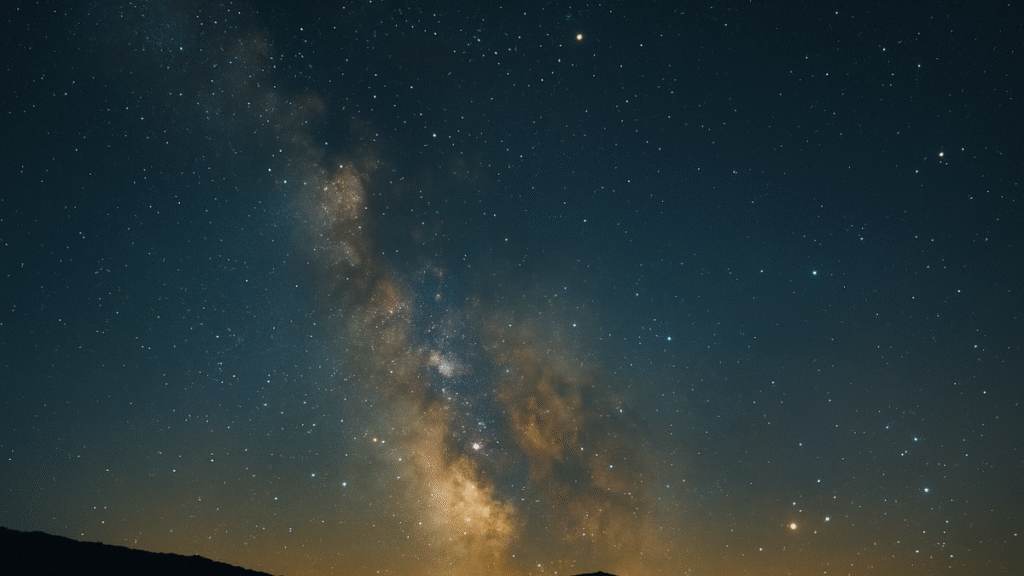
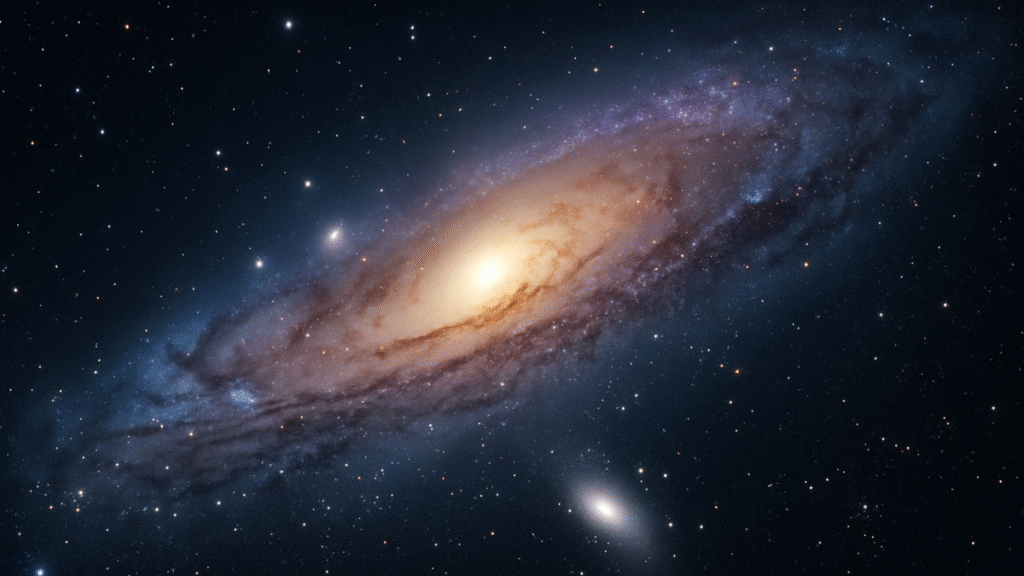
The images in this post were generated with AI assistance and are illustrative only
What T Coronae Borealis is
T Coronae Borealis, T CrB for short, is a star in the constellation Corona Borealis, the Northern Crown. It even has a nickname among observers: the Blaze Star. Where it sits isn’t the interesting part, though. What matters is the kind of system it forms.
This isn’t a single isolated star at all. It’s a binary system made of a white dwarf and a red giant, roughly 3,000 light-years out, circling each other about every 228 days. Everything that happens here comes down to how those two interact.
The white dwarf is the compact remnant of a star that already burned through most of its nuclear fuel. The red giant is aging and swollen, and it keeps shedding material. That material ends up on the white dwarf, piling onto its surface year after year.
Once conditions are right, that accumulated layer detonates in a thermonuclear flash and the brightness jumps. That’s a nova.
With T CrB, the process doesn’t happen once. It repeats, which is what recurrent means. Here’s the part people get wrong constantly: this is not a supernova, however often the two get mixed up.
A recurrent nova is vastly less destructive than a supernova, and it’s still a spectacular thing to watch.
What recurrent actually means
That word does a lot of work. We’re not dealing with a star that blows up once and vanishes. We’re dealing with a system that can run through several eruptions separated by decades. T CrB has confirmed outbursts in 1866 and 1946, plus likely earlier ones in 1787 and possibly as far back as 1217, which works out to a rhythm of roughly 80 years. That’s a gift for astronomers, because they get to study the same phenomenon more than once and compare the runs.
I find it fascinating because it gives you the sense that the universe breathes in cycles. Not everything happens once and for good. Some stars run on an internal rhythm that carries them through quiet stretches and then into bursts of activity.
T Coronae Borealis has been watched at different points in history, and every fresh round of anticipation about a possible outburst puts it back at the center of the conversation.
The recurrence also helps the modeling. If a nova only went off once, there’d be nothing to compare it against. When the process repeats, you can hunt for patterns, estimate timing, and get a much better handle on how the two stars pull on each other.
How a recurrent nova works
A recurrent nova comes out of one very specific interaction between two stellar bodies. On one side, the white dwarf, dense and compact. On the other, the red giant, losing its outer layers. That material doesn’t just fall in any old way. It forms an accretion stream that settles onto the white dwarf’s surface.
Over time, the pressure and temperature in that layer climb toward a critical point. Once they hit it, a thermonuclear reaction takes off, throws material into space, and sends the brightness spiking.
This isn’t an explosion that destroys the star. It’s a surface event that transforms the luminosity and leaves the system standing.
What I like about it is that as violent as it gets, the physics is clean. Nothing here is chaos without an explanation. It’s a process we can study with real precision.
Some mystery survives anyway, because every system has its own quirks. T Coronae Borealis earned its reputation by pairing a long record of activity with being close enough and bright enough to keep an eye on.
Why astronomers and amateurs care this much
T CrB matters for several reasons, and not only for the chance of seeing it blaze up. For working scientists, it’s an opportunity to study a recurrent nova in real time with modern instruments, measuring what changes before, during, and after the event.
You can’t get that kind of data on stellar dynamics, accretion, and binary evolution any other way.
For those of us who look up out of plain curiosity, the draw is different. It’s the shot at witnessing something rare with our own eyes, even if it never turns into a blazing beacon for weeks on end.
Knowing that a star can change its appearance that drastically is a reminder that the universe is alive in a much broader sense than we usually picture.
There’s one more thing. Events like this build community. All of a sudden, people who don’t normally follow astronomy start looking things up, finding Corona Borealis overhead, asking when the next outburst might land. That gets people genuinely interested in science, and that’s always good news.
When it might brighten again
The question that comes up more than any other is when the next eruption arrives. The honest answer is that we’re working with estimates, not a guaranteed date. In astronomy, particularly with events that recur without being perfectly periodic, every prediction comes with a margin of error.
What we do know is that the last confirmed eruption was 1946, and the gap before that ran about 80 years, which puts us squarely inside the window. Astronomers have been tracking a set of indicators: brightness changes, variations in the binary, behavior that historically ran ahead of past outbursts. Several specific predicted dates have already come and gone with nothing happening, which tells you plenty about how hard this is to pin down.
Keep your expectations calibrated. Nobody is going to see a second sun or an apocalyptic blast. What should happen is that a star sitting around magnitude 10, meaning telescope-only, jumps to roughly magnitude 2, about as bright as Polaris. It should stay naked-eye visible for a few days and stay within binocular reach for about a week after that. For astronomy, that’s enormous. For a curious eye, it is too, because there’s something particular about watching a point of light change personality.
How to watch for it from your backyard
Corona Borealis is easy enough to recognize at the right time of year, and with a little practice you’ll find it without much trouble. Look for the small backward C between Boötes and Hercules. The simplest way in is to use Arcturus and Vega as signposts, since they’re two of the brightest stars in the sky and the Northern Crown sits between them.
A star going off doesn’t look like a science fiction movie. Real observing tends to be subtler than that, and no less exciting for it.
When a recurrent nova brightens, it can go from an object nobody notices to an obvious star. That’s what makes following it worthwhile. Amateur observers stay on top of star charts, apps, and observatory bulletins so they know when to go looking.
If you ever want to try to catch it, my advice is simple: don’t chase instant spectacle. A lot of the charm lives in knowing the exact spot in the sky and understanding that this particular light is going through something extraordinary. The whole experience shifts once you stop treating the sky as a postcard and start seeing it as a place where things are happening.
Nova versus supernova
A nova and a supernova are not the same thing. Both involve a huge jump in brightness. The physical scale and the star’s fate are completely different.
In a nova, as with T Coronae Borealis, the explosion happens on the surface of a white dwarf that’s been collecting material from a companion. The star isn’t destroyed. The system survives and can do the whole thing again later.
In a supernova, the energy released is vastly greater, and it usually means the total destruction of the star or a radical transformation into something else entirely. Far more dramatic in physical terms.
Put simply: a nova is a surface explosion inside a binary system, and a supernova is a much more extreme stellar ending. That’s why T CrB shouldn’t be treated as a threat. It’s an opportunity, both for science and for your own eyes.
What it teaches us about stellar evolution
T Coronae Borealis isn’t only interesting on its own terms. It also works as a window onto how stars change across millions or billions of years.
Watching a binary where a white dwarf keeps piling up material lets us study mass transfer, orbital stability, and how aging stars behave.
It also reminds us that stars aren’t static objects. They have histories, dynamics, transformation. A star is born, grows, changes, sheds mass, swells up, and finishes in one of several very different states.
Systems like this one are especially useful because they pack so many fundamental questions about the stellar life cycle into a single object.
I think a good part of the appeal lives right there. We’re not just looking at a star, we’re looking at a cosmic laboratory that helps us understand how the universe runs.
We tend to assume astronomy is about looking at pretty things overhead. It’s also about reading the biography of the cosmos.
Why it’s all over the news and social media
Any time an astronomical event might be visible or might land on a relatively near timescale, interest spikes. T Coronae Borealis fits that pattern perfectly. The name starts circulating, people search for it, outlets explain it, and social media amplifies the hype.
There’s a real upside to that, since it brings science to people who wouldn’t have gone looking for it on their own. There’s a downside too. When astronomy news goes mainstream, the expectations get oversold. Worth keeping both feet on the ground here.
T CrB is genuinely exciting, and it shouldn’t be sold as some overwhelming display or as something that will permanently change the night sky.
Good science writing is exactly this: spark the interest without inflating it. Report with enthusiasm and with rigor. The phenomenon is interesting enough on its own that it doesn’t need dressing up.
How to follow what happens next
If this recurrent nova genuinely interests you, stick to reliable astronomy sources: observatories, specialist communicators, and scientific updates that document any real change. The trick is not stopping at the eye-catching headline but watching how the information develops over time.
It also helps to get familiar with the night sky itself. Knowing Corona Borealis, recognizing its neighbors, and learning to orient yourself a little will make the whole experience much richer.
At that point you’re not just reading about a star. You can place it mentally and feel like you’re following its story on the map of the sky.
Something else changes once you’ve been watching one specific star for weeks or months. It stops being a data point and turns into a presence. In astronomy, that’s one of the best experiences there is.
What makes T Coronae Borealis special
There are plenty of interesting stars out there. T Coronae Borealis has something that sets it apart. It isn’t only tied to a striking physical event, it also creates a very human relationship with the sky: waiting.
We keep an eye on it, we watch for signals, we talk through the possibilities, and we get ready for something that may not arrive tomorrow but could show up on any given night inside a fairly near window.
That mix of science and anticipation is what makes it memorable. It isn’t a background star or an anonymous catalog entry. It’s a lead role waiting to be played. That right there is what pulls so many people into astronomy: the sense that the sky still has open chapters.
Myths and misunderstandings
Once something like this starts getting attention, the misunderstandings show up alongside it. One of the most common is picturing a recurrent nova as some kind of universal catastrophe. It isn’t.
Another frequent one is assuming it’ll be easy to spot, or that it’ll hold an impressive brightness for a long stretch. Don’t count on either.
People also mix up nova, supernova, and variable star all the time. Three different things. T Coronae Borealis is a recurrent nova in a binary system, not a supernova about to wreck the galaxy and not some moody star changing brightness for no reason. Which is exactly why the vocabulary matters. In astronomy, words carry weight.
Frequently asked questions about T Coronae Borealis
What is T Coronae Borealis?
A binary star system in the constellation Corona Borealis, about 3,000 light-years away, known for being a recurrent nova. Observers call it the Blaze Star.
Why is it called a recurrent nova?
Because it can brighten dramatically in episodes separated by years or decades, and then do it all over again. T CrB erupted in 1866 and 1946, roughly 80 years apart.
Is it dangerous to Earth?
No. It sounds spectacular, and it poses no threat whatsoever to our planet.
Can you see it with the naked eye?
Not in its quiet phase, when it sits around magnitude 10 and needs a telescope. During an eruption it should reach roughly magnitude 2, about as bright as Polaris, and stay visible to the naked eye for a few days. Catching it still depends on timing and on your sky conditions.
Is it the same as a supernova?
No. A recurrent nova and a supernova are different events, on wildly different scales and with different outcomes. A nova leaves the star intact, a supernova generally does not.
Why does it generate so much interest?
Because it combines rarity, beauty, scientific value, and the chance to watch one specific star visibly change.
Closing thoughts
T Coronae Borealis is a lot more than a name that’s hard to say out loud. It’s a way into understanding how binary star systems work, what a recurrent nova is, and why the universe is still a place full of surprises.
It strikes me as one of those subjects that puts you back on good terms with your own curiosity, because it proves there are still events overhead capable of genuinely moving us in the twenty-first century.
Best part of all is that you don’t need to be an expert to enjoy the story. It takes looking up with a little more attention and letting the idea land that some stars up there run on cycles we’re still learning to read. That, honestly, is a wonderful thing.
If you made it this far, I’d love to know what you make of T Coronae Borealis and whether you’d heard of this recurrent nova before. Leave a comment and let’s keep the conversation going. Sometimes the most interesting part of astronomy starts the moment somebody asks a question nobody saw coming.